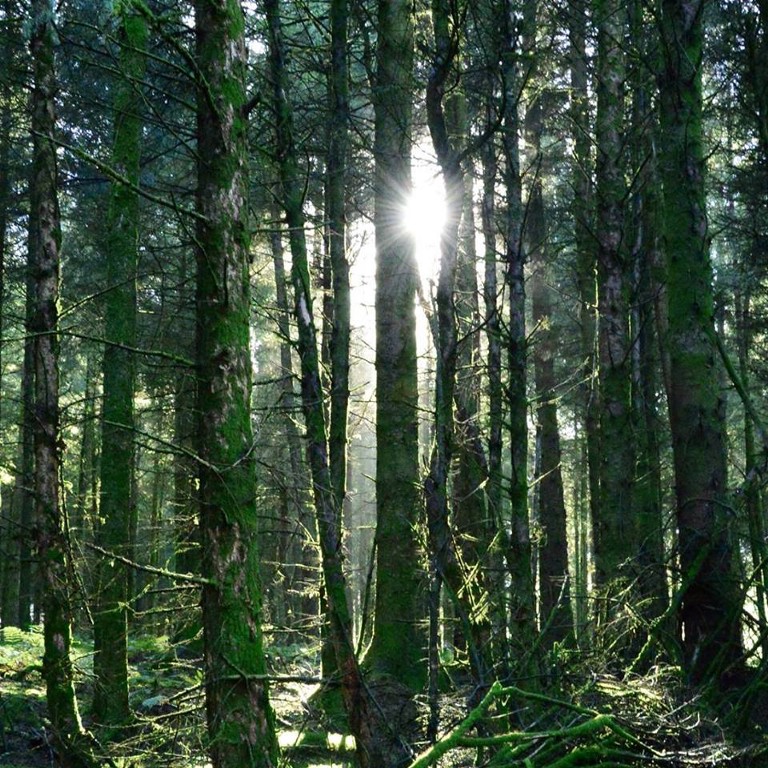
foto©fionacullen2010
“You should be told as a child that all the people of the place where you were born will follow you all your life through all the places you will ever live. And you will remember. It’s the sense of a place. But it’s much more.” Rob Cullen.
Don’t let go.
The roadway to the school skirted the bay. Steel grey skies, black seas raging, and those white wave crests. Astra heard the waves crashing on the rocks. She could taste the salt carried in the ozone filled air. The hood of the coat protected her from the worst of the icy blast but, even so, her eyes still smarted and ran with tears. Astra was tall and slim like most of her people. She walked quickly with a long determined stride. She watched the light flurries of snow gust past. Blown snow they’d said. It wouldn’t come to much they’d told her to reassure her. She’d never seen snow before she’d come to this country that was now her home. She hadn’t seen the sea before the escape out of Libya to Italy. She’d been terrified the first time she saw the high waves as the boat began to sink. Now as she walked along the bay road she could hear the sound of the breaking waves far below and it still frightened her.
The school had closed. It was a few days before Christmas. Astra knew her job. They’d shown her how to clean and what to do in each classroom. She had qualifications, a degree, but she took the job cleaning in the school. There was no other choice. They’d taken time to show her the ropes. That was how they described it.
When they said those words the first time it frightened Astra. She always tried to block out those old memories. But she couldn’t always control what she’d been told were “flashbacks” — the way she had been tied with ropes and all the other things she blocked out of her thoughts. She was grateful to be welcomed in this place. It was peaceful and quiet here. But she thought she would never get used to the wet and cold. It rained day after day and went on raining. She longed for the sun’s warmth on her skin.
…
Astra had been given the keys to the school. The Supervisor had told her he would call in at five to take her back to the village. The school was an old building with a high pitched black grey slate roof and high windows. They’d said it was Victorian. She didn’t understand what the word meant and just nodded as she always did out of politeness and made the “aha” sound to show that she understood even when she didn’t. She opened the heavy grey door. The smell in the school of disinfectant was so powerful it made her cough. Astra thought about the school in her village. A small isolated building in the Rift valley surrounded by high wire fences to keep the hyenas out especially at night. There was a single tap for water. White painted walls and bare wood tables where they sat for their lessons. That was all. She learned to read and write. She learned mathematics. She loved reading. She began to learn about a world outside.
Astra wandered from class room to class room switching on the lights. It was only when she opened the staff room that she caught the smell of tobacco. She’d been told she would be alone in the building. She stopped to listen. Just silence. She retraced her footsteps to see if she’d left the front door unlocked. The smell of tobacco had grown stronger. She looked out at the darkening sky even though it was supposed to be day-time. The snow falling was different now, large, huge even, snowflakes as big as saucers hurled themselves out of the sky. The roadway was completely white.
Astra took her coat off and listened to the silence of the building. The heating system had been switched off for the Christmas holidays but the building still held a warmth. She started cleaning the youngest children’s classroom. She hoovered the floor. After that was done Astra stood for a while looking at the prettiness of the Christmas tree. As she stood there the silver tinsel decorations began shimmering, and two Christmas cards toppled over, as if a door had opened behind her sending a draft of air through the room, and bringing coldness that caused her to shiver. She turned but the door was closed. The slight tingling sound of a star hanging from one of the branches at the top of the tree immediately caught her attention and she felt her skin prickle with fear. She was certain now someone else was in the building.
Astra watched the snow through the high windows as it swept across the sky. She could see that drifts had begun to gather against the playground wall. She felt as though she had been forgotten. But the Supervisor had promised to collect her at 5.00pm without fail. Even so Astra was worried and had begun to think maybe she should lock up and walk back to her home before it became worse.
But then she worried about what the Supervisor would think of her if he came and she was not here.
“This was a trial.” he’d said.
She needed the job. Besides it was four o’clock only another hour. She decided to keep busy and finish cleaning the classrooms.
…
As Astra entered the next classroom the lights began flickering. Darkness. She felt for the light switch, flicked it on and then off, and back on. Nothing happened. Through the tall windows she could see the sky was completely dark now. She walked to the head master’s office picked up the landline phone. There was no dial tone. Her mobile showed barely a single bar. She heard the Supervisors recorded voice, and the message to leave a number and he would call back. Then silence. The signal had gone. And then that smell of tobacco again. Stronger now.
Astra walked into the hall. An orange glow filled the huge space. She could see the outline of a man sitting with his back to her in front of the large cast iron stove. The window of the door of the stove glowed with deep orange flames that flickered across the high walls of the hall. Astra walked to a position in the room where there was a distance between her and this man but a place where she could observe this man more clearly. He was elderly, a thick head of grey black hair and a heavy moustache and a small pipe jutted out of his mouth which was the source of the smell of tobacco.
“Excuse me sir? Do you work in the school? I have not seen you before.”
“Hello young lady. Worked in the school since I was invalided out of the army. I come from here. I’ve always been here. Pull up a chair in the warmth dear. I think by the look of things we might be here for a while.”
“I am locking up the school and you should leave now.”
The man turned towards her.
“In my experience if you walk from this place on a night like this you would place yourself in danger. It is not the sort of weather to be caught outdoors. Best to stay here where you are safe. They will come for you. Just be patient.”
Astra felt complete uncertainty about what she should do. She recognised the growing fear within herself, that ache in her stomach. She watched as the man turned to look out at the night sky and the snow drifting past the windows.
Astra pulled a chair so that she sat at an angle close to the warmth of the stove but from a position where she could observe this man closely.
…
“Where do you come from my dear?”
Astra considered the question. In the past she would lie or avoid answering. He spoke quietly almost a whisper. There was something calming about his voice.
“You have not answered my question young lady. I like to hear people’s news. Take your time I have all the time in the world.”
Astra hesitated again but then spoke of the place she’d grown up.
“My village is not far from the road to Djibouti. My family look after their herds — always looking for new pastures.”
“Herds of cattle.”
“Camels. Some cattle, sheep and goats also. When the rains fail life is very hard. The cattle die. The old and children also. My people are thought of as backward and punished as if they are animals. If my people resist, the repression only becomes worse. Bad things happen. So I left.”
foto©robcullen2010
Astra held a glimpse of her fathers and brothers with the herd. She smiled. She brushed tears away from remembering.
“I came here to live again — in the rain.”
“And the snow.”
They both laughed.
“What is your name?”
“Astra.”
“Astra, if I remember my Latin lessons, it means star — if I’m not mistaken.”
“Aha. Astra is not my name. It was a name given to me by the aid workers.”
She went on.
“I was pulled out of the sea. Dead. No life in me. I was drowned.”
“Drowned did you say?”
“They breathed life into me. I came back. It was not my time they said.”
“Dead?”
“My real name was difficult for them. They called me Astra. But it is the name of another’s life. It is not my name.”
…
She heard her mobile ring. Ran for it but the phone immediately went into answerphone.
“Hello Astra.” She heard the Supervisor say.
“We will get to you as soon as we can. We’re trying to get to you…”
The voice faded and the signal died. She felt — what did she feel? Numb. Fear. The ache in her stomach was intense now. The fear she felt now, mingled with meories of that old pain.
Astra returned to sit with the old man. She felt herself immediately tense as he rose and walked slowly to the kitchen. He returned out of the darkness with an old brown enamel kettle he placed on the top of the stove. He walked away again and returned with two grey blankets. He held them out to her.
“Wrap yourself in these Astra. They’ll keep you warm.”
“My name is Tomos by the way.”
They sat in silence.
“You said you were dead just then. You are alive are you Astra?”
“I’m alive. That is a strange question. ”
“Only sometimes I see things — people and I’m not sure….”
Steam started rising from the kettle. Astra watched as he made tea. He passed her a mug. It was sweet with lots of milk and sugar. She sipped at the warm liquid and felt very tired. She found difficulty keeping her eyes open. She listened as Tomos spoke about the hard winters of the past and a year when the heaviest falls of snow left the village cut off for weeks.
“People had to go out in it. However bad the weather was and dig out sheep covered by the blizzard. I don’t suppose your family had that kind of problem.”
Astra laughed and shook her head.
“No. Never.”
“Do you know the snow was so high, sometimes, it was easier walking on the tops of the hedges rather than try to walk through the depths of the snow in the roads?”
He shook his head.
“But we managed. Somehow we managed and got through. And then the rains came and washed it all away but that brought its own problems. Then there was the flooding. Life is like that.”
…
She heard herself say –
“In my country things are bad. The government kills my people.”
She felt his eyes on her.
“If I hadn’t run — I would not live. I would not be here.”
Tomos looked at her for a long time before turning to stare out at the swirling snow in the darkness of the night sky.
“I think I should leave now and go back home. What will you do?”
“Astra it would be madness if you try and go out on a night like this. You are safe here. Best stay and wait. They will come for you.”
Astra could no longer keep her eyes open. She fell into a disturbed, restless sleep. Occasionally she would wake and listen to the storm gusting against the roof and see the stream of snow blown across the darkness outside the windows.
Tomos remained sitting silhouetted against the orange glow from the stove. Now and then she heard him open the stove, heard the roar of the draw of the fire and watched as he shovelled coal and the red flames that shot out.
Watching Tomos her attention was caught by droplets of water falling from his sleeve to the floor. Astra noticed the drops falling onto the wooden floor below the chair he was slouched on. Droplets of water gathering at the sleeve of his coat, to run along the palm of his hand, and fall steadily, one after the other to the floor. The sight of it brought her out of her sleepiness. She thought she could hear the water dropping into the small pool gathered under his chair.
“Tomos are you wet? Shouldn’t you get out of that coat and let it dry?”
“No need to worry about me young lady. I’m used to it. It’ll dry through in time.”
Astra listened to him reminiscing about the war, the desert and the heat and as he spoke for the first time she saw the unreflecting blackness of his eyes. It was as if his eyes had no life in them.
“Tomos? In my family we are different from others. We see things others cannot see. We see what are called spirits. We see the dead who still walk in this world. Do you understand me?”
“Now that’s strange you should say that. My grandmother had what they called second sight. Or so she said. Now that’s a queer thing. Why are you telling me this?”
“But you understand?”
“Oh yes. In these parts certain families were said to have what they called the “eye”. People who see the dead”
“Spirits of the dead?”
“Some people thought that.”
“I will tell you a story Tomos. In my home I would wake early and go to water the cows and goats. A cow that I liked had a calf. I loved the calf. I would go to her. And give her whatever sweet grass I could find. Some water too. I remember one morning when I was walking back to my parents hut on the pathway in front of me stood a man I did not immediately recognise. He was small, stooped and old. I stopped. I was frightened. He looked at me and smiled and I recognised the eyes of my grandfather. He was looking at me but looked as if he could not see me. His eyes were black. But of course he had died. I bowed to him, greeted him and called him Abu. A mark of respect for an elder in my home you understand. He nodded and walked by me without saying a word. I walked on but every now and again I turned to see whether he was following. He frightened me. It seems our spirits are like yours. The dead still walking in places they were once familiar with. They are still wandering — unseen — apart from some people who can see them.”
“Isn’t it strange? We are two people from different countries. And end up talking about this. It’s strange.”
The old man spoke again.
“It’s my turn to tell you a story Astra. Once when I was a young child I was very ill. I was at deaths door if the truth be known. Throughout the time of my illness I would wake in the early hours and see an old woman sitting in the darkness. My mother told me afterwards we all have guardians that look after us and warn us when we are in great danger. My mother believed that the old lady was keeping me awake preventing me from slipping away at that time they call the wolf’s hour. I don’t suppose you’ve heard of it. But it’s the time at night when the old and sick slip away. My mother said she thought the spirit was telling me it was not my time.”
“Tomos was she a spirit?”
He sighed — “I am tired now Astra.”
There was a moment of silence.
“The old woman who sat at night with you when you were a child?” Astra asked.
“Yes. What about her?”
“Did you ever see her again?”
“No, not see her exactly. I thought I heard her voice once though.”
“Tomos when was that?”
“Funny thing about that. It was a snow storm like tonight. I was going home from the school. I could hardly walk against the wind. And the snow was so deep it was nigh impossible to walk.”
She heard him draw a deep breath as though he was finding it hard to get the words out.
“Do you understand Astra? I was being blown backwards. I was a strong man but I couldn’t keep my feet. I never in my life felt so tired. I wanted to lie down in the snow and go to sleep. But I fought it.”
“And the voice? What did she say to you?”
”She told me to let go. “Tomos its time to let go now”. Is what she kept saying.”
“Just that?”
“Yes just those words. But I wasn’t ready. Her words made me angry. I couldn’t let go. I was young. I had a life to live.”
“What happened then Tomos?”
“I got through. I’m here Astra.”
“Yes I can see you Tomos.”
“I’m here Astra. Do you understand?”
“I can see you and hear you. Abu you must know?”
Both looked at each other in silence.
“Astra why did you call me Abu?”
“You must know?”
Astra searched for any expression on his face. The old man turned towards the glow of the fire. She watched as he closed his eyes.
“I’m tired now Astra.”
The fire started to die. The room became darker and the man called Tomos became a silhouette she could barely discern from the gloom that had overtaken the room. She began to feel herself fall into sleep. But in a brief moment of wakening she saw orange lights flash across the sky outside. It took a few minutes for her to realise someone had come for her. She was going to be rescued. Astra ran to the main door of the school. Opening it she saw the headlights of a huge tractor with orange lights flashing on its cab. She saw the man get out and walk towards her.
“Astra? Get your things together. I’m taking you back. Are you OK?”
“Yes I’m alive. Thank God you came.”
Astra ran to get her coat and bag. The chair where the old man had been sitting was empty.
Somewhere in the back of the school she heard the sound of a heavy door slam shut.
Astra whispered –
“Tomos don’t let go.”
©robcullen2020.
…

foto©fionacullen2010