


In contrast to other creatures, depictions of the ram in Celtic art are comparatively rare. For example, on fibulae with zoomorphic decoration less than 2% feature the ram, and in the vast majority of cases where the animal is represented it is most often the head alone, naturalistic or schematically, which is portrayed (see: Cluytens M. (2009) Réflexions sur la symbolique du bélier chez les Celtes protohistoriques à travers les représentations figurées, Lunula. Archaeologia protohistorica 17, 201-206).
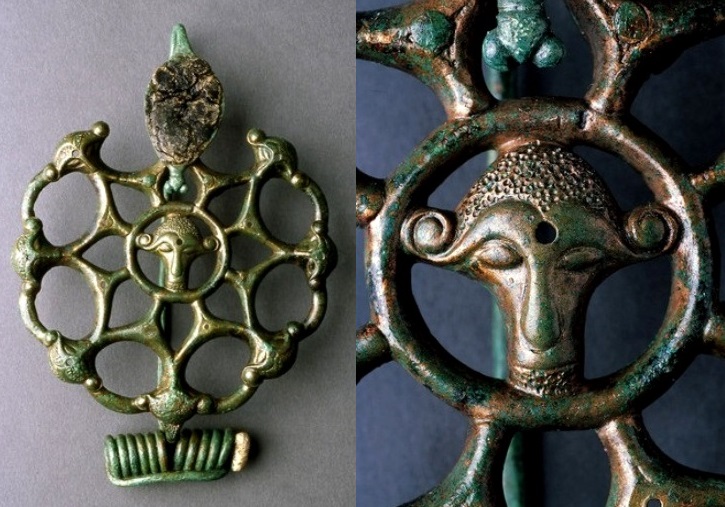
Fibula from the burial of a Celtic woman at Orainville (Aisne), France (bronze/coral) decorated with ram head motif (300-275 BC)
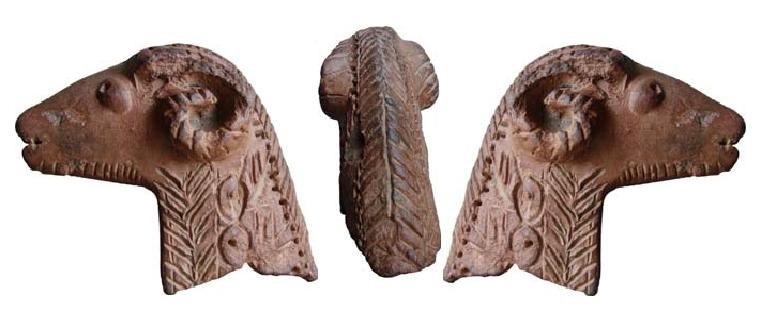
Zoomorphic/ram head attachment from a Celtic (Scordisci) firepot from Boznik (Pernik region), Bulgaria (late 2nd / early 1st century BC)
https://www.academia.edu/5046182/Zoomorphic_Cult_Firepots
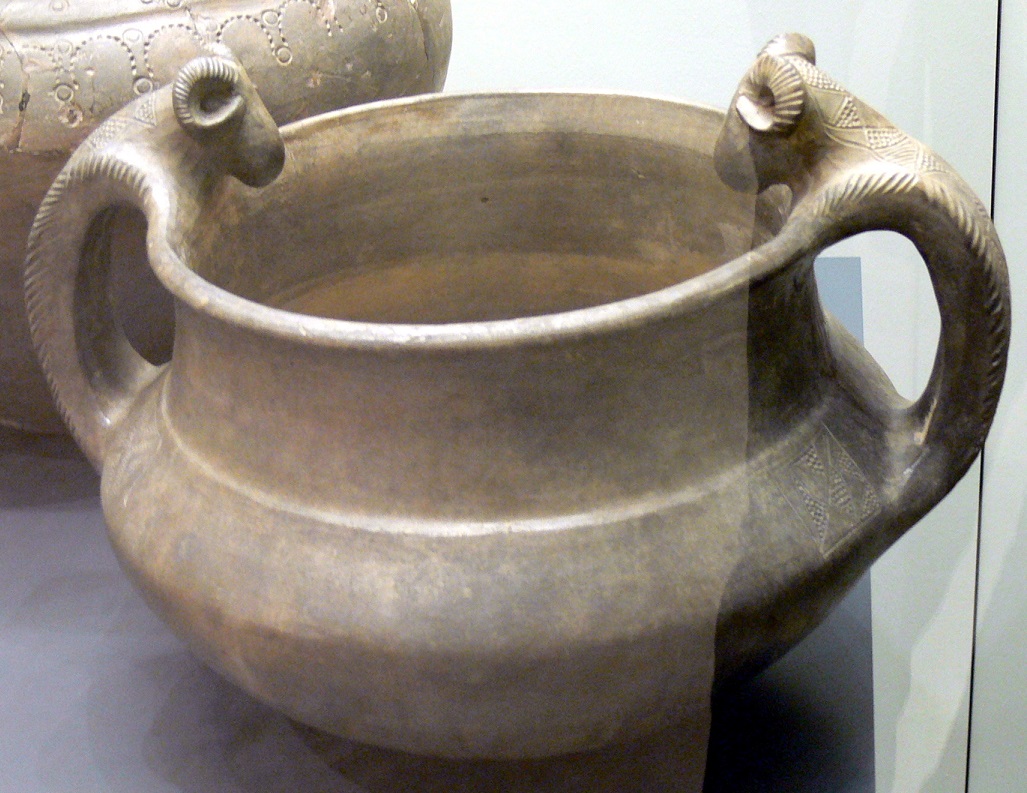
Danubian kantharos with ram head handles from the burial of a Celtic woman at Csobaj, (Kom. Borsod-Abaúj-Zemplén), Hungary
(3rd c. BC)
https://balkancelts.wordpress.com/2013/07/01/the-archaeology-of-heads/
The head of the…
View original post 514 more words
 Celfypridd